例外处理
- >例外是一个异常事件,发生在程序执行过程中,并突然停止程序(立即)
>
->异常处理允许响应错误,而不是崩溃运行程序。
语法: try:
# code that might raise an exception
except someexception:
# code to handle the exception
else:
# code to run if no exception occurs
finally:
# code to run regardless of whether an exception occurs
>
1。尝试块try块包含可能引起异常的代码。
- >
- 如果发生异常,则将其传递给块。 2。除了block
-
block处理在try块中发生的异常。
- >您可以指定不同类型的异常,也可以使用一般条款以捕获所有异常。
-
4。最后阻止(可选)
- 最终块执行,无论是否出现异常。 >
>示例:
- >
- 1)
-
try:
    no1 = int(input("enter no."))
    no2 = int(input("enter no. "))
    print(no1//no2)
except zerodivisionerror:
    print("no2 should not be zero. check no2 value ")
print(no1+no2)
>输出:
enter no.10
enter no. 0
no2 should not be zero. check no2 value
10
2)
try:
    no1 = int(input("enter no."))
    no2 = int(input("enter no. "))
    print(no1//no2)
    print(no1+no2)
except zerodivisionerror:
    print("no2 should not be zero. check no2 value ")
except valueerror:
    print("inputs should be numbers ")
>输出:
enter no.10
enter no. ten
inputs should be numbers
3)
try:
    no1 = int(input("enter no."))
    no2 = int(input("enter no. "))
    print(no1//no2)
    print(no1+no2)
    f = open("pqrs.txt")
except zerodivisionerror:
    print("no2 should not be zero. check no2 value ")
except valueerror:
    print("inputs should be numbers ")
except:
    print("something went wrong")
>输出:
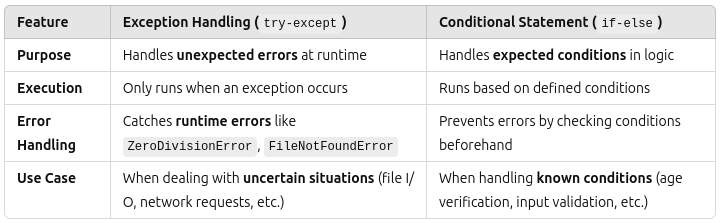
#if all inputs are correct enter no.10 enter no. 5 2 15 #if any error not specified particularly enter no.10 enter no. 5 2 15 something went wrong #if zerodivisionerror enter no.10 enter no. 0 no2 should not be zero. check no2 value #if valueerror enter no.10 enter no. ten inputs should be numbers异常处理和条件语句之间的区别
:
**注意:**
- 处理不可预测的错误时,请使用try-exce
->处理预期条件时使用if-else
追溯模块:
python中的追溯模块用于提取,格式和打印错误跟踪信息,有助于调试和日志记录异常。
>示例:1
import traceback
try:
    no1 = int(input("enter no."))
    no2 = int(input("enter no. "))
    print(no1//no2)
    print(no1+no2)
    f = open("pqrs.txt")
    print(f.read())
except (valueerror, zerodivisionerror) as msg:
    print("check ",msg)

except:
    print("something went wrong")
    traceback.print_exc()
>输出:
enter no.10
enter no. 0
check  integer division or modulo by zero
>示例:2
import traceback
try:
    no1 = int(input("enter no."))
    no2 = int(input("enter no. "))
    print(no1//no2)
    print(no1+no2)
    f = open("pqrs.txt")
    print(f.read())
except (valueerror, zerodivisionerror) as msg:
    print("check ",msg)
except:
    print("something went wrong")
    traceback.print_exc()
finally:
    print("check finally message")
>输出: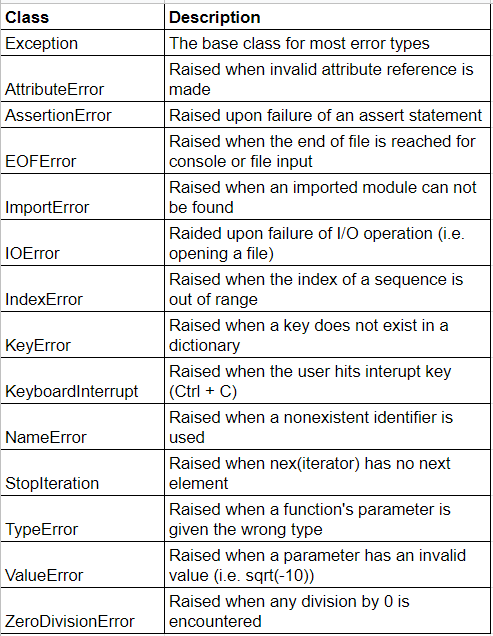
enter no.10 enter no. 10 1 20 something went wrong traceback (most recent call last): file "/home/guru/desktop/guru/python/user.py", line 7, inf = open("pqrs.txt") ^^^^^^^^^^^^^^^^ filenotfounderror: [errno 2] no such file or directory: 'pqrs.txt' check finally message
捕获多个特定异常:
>
->我们可以在单个单个中处理多个异常,除了使用元组。
->使用,因为我们也可以为异常提供一个可变名称。
trackback.print_exc():它提供详细的错误信息(行号,错误类型,消息)。

优势:采用WEB2.0技术。页面采用DIV+CSS设计。页面简单,打开速度快。同时考虑到能快速被搜索引擎收录,因此在每个页面打开后,都自动形成“.html”的“伪静态”,这样更容易被百度,谷歌等搜索引擎收录,例外后台也优化了代码。处理更加方便快捷,登陆后台可以自动设置网站的标题,LOGO,名称等。 功能介紹: 1.网站
class employee:
    pass

emp1 = employee()
emp2 = employee()
print(emp1)
print(emp2)
>输出:
<__main__.employee object at 0x730a36434110>
<__main__.employee object at 0x730a36434080>
pass关键字的意思是“无所事事”(占位符),因此该类目前为空(它没有属性或方法)。
__ doc __(docstring属性)
> __doc__属性用于访问类,功能,模块或方法的docstring。 docstring是一个多行字符串,提供有关对象的文档,该对象在triple引号('''''')中声明。
>示例:
class employee:
    '''this class is for creating employees'''
print(employee.__doc__)
>输出:
4
this class is for creating employees
自我关键字:
立即学习“Python免费学习笔记(深入)”;
->“ self”用于访问和操纵类中的实例变量和方法。 -> self代表类的实例。>
>特定对象的
- 使用self.variable_name定义的>。
->对于每个对象唯一。
>示例:1
class employee:
    def work(self):
        print(self.empname, self.job_nature)

emp1 = employee()
emp1.empname = 'guru'
emp1.job_nature = "designing"
emp2 = employee()
emp2.empname = "pritha"
emp2.job_nature = "development"
emp1.work()
emp2.work()
>输出:
guru designing
pritha development
>示例:2类,带3种方法:
class employee:
    organization = "infosys"
    def work(self):
        print(self.empname, self.job_nature, self.organization)
    def take_leave(self):
        pass
    def promote(self):
        pass

emp1 = employee()
emp1.empname = 'guru'
emp1.job_nature = "designing"
emp2 = employee()
emp2.empname = "pritha"
emp2.job_nature = "development"
emp1.work()
emp2.work()
>输出:
guru designing infosys
pritha development infosys
类特定信息:
类别的信息是指在类的所有实例(对象)之间共享的数据。
>示例:
class employee:
    def work(self):
        print(self.empname, self.job_nature, self.organization)

    def take_leave(self):
        pass

    def promote(self):
        pass

emp1 = employee()
emp1.empname = 'guru'
emp1.job_nature = "designing"
emp2 = employee()
emp2.empname = "pritha"
emp2.job_nature = "development"
employee.organization = "infosys"
emp1.work()
emp2.work()
>输出:
guru designing infosys
pritha development infosys