本文讲解如何在 php 面向对象设计中,让父类以松耦合、可维护的方式支持子类方法的动态调用,避免硬编码依赖、类型错误和 ide 报错,推荐使用抽象方法、`method_exists()` 或方法重载等符合 oop 原则的解决方案。
在 PHP 中,父类直接调用子类特有方法(如 $this->childMethod())虽在运行时可能“看似有效”,但存在严重设计缺陷:违反里氏替换原则(LSP),破坏类型安全性,且会导致静态分析工具(如 PHPStan、VSCode 的 PHP Intelephense)报错——因为 ParentClass 本身并未声明或保证 childMethod() 的存在。
✅ 正确做法一:使用 method_exists() 进行运行时检查(适用于可选扩展逻辑)
若子类方法是可选实现(即并非所有子类都必须提供),应在父类中显式校验:
class ParentClass {
    public function parentMethod(): void {
        if (method_exists($this, 'childMethod')) {
            $this->childMethod();
        }
    }
}

class ChildClass extends ParentClass {
    public function childMethod(): void {
        echo "Child logic executed.\n";
    }
}
⚠️ 注意:method_exists($this, 'childMethod') 是标准写法;原文中的 childMethodExist() 是未定义函数,会导致致命错误。
✅ 正确做法二:声明抽象方法(推荐用于强制契约)
若 childMethod() 是子类必须实现的核心行为,应将父类改为抽象类,并声明抽象方法:
立即学习“PHP免费学习笔记(深入)”;
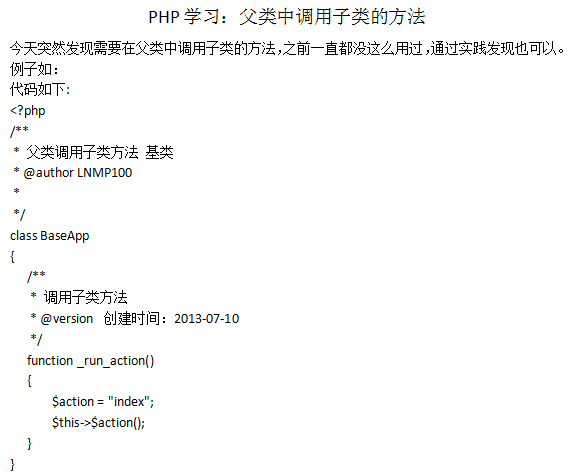
abstract class ParentClass {
    public function parentMethod(): void {
        $this->childMethod(); // 类型安全:编译器/IDE 可确认该方法存在
    }

    abstract protected function childMethod(): void;
}

class ChildClass extends ParentClass {
    protected function childMethod(): void {
        // statement 1
        // statement 2
    }
}
✅ 优势:
- 编译期即校验,无运行时风险;
- IDE 自动补全、类型提示完整;
- 清晰表达设计意图(“此行为由子类负责实现”)。
✅ 正确做法三:子类重载父方法(适合需前置/后置逻辑的场景)
当子类需在 parentMethod() 执行前后插入自定义逻辑时,应重写并显式调用 parent::parentMethod():
class ChildClass extends ParentClass {
    public function parentMethod(): void {
        // 子类前置逻辑(可选)
        echo "Before parent logic\n";

        parent::parentMethod(); // 复用父类核心流程

        // 子类后置逻辑(可选)
        echo "After parent logic\n";
    }
}
此时,父类无需知晓子类细节,职责单一,符合“开闭原则”。
❌ 不推荐的做法
- 在父类中硬编码调用未声明的方法(如 $this->childMethod() 无校验)→ 类型不安全、IDE 报错、难以维护;
- 使用 @method PHPDoc 伪声明 → 仅改善 IDE 提示,不解决运行时风险与设计问题;
- 依赖 is_a($this, 'ChildClass') 等类型判断 → 破坏多态性,违背面向对象封装原则。
总结
| 场景 | 推荐方案 | 关键优势 |
|---|---|---|
| 子类方法为可选扩展 | method_exists($this, 'xxx') | 灵活、低侵入 |
| 子类必须实现某行为 | 抽象方法 + 抽象父类 | 类型安全、契约明确、IDE 友好 |
| 需定制执行流程 | 子类重载 + parent::xxx() | 复用与扩展兼顾,高内聚低耦合 |
始终牢记:父类不应依赖具体子类,而应通过接口、抽象或运行时契约来支持多态行为。 这才是健壮、可测试、易演化的 PHP OOP 实践。